
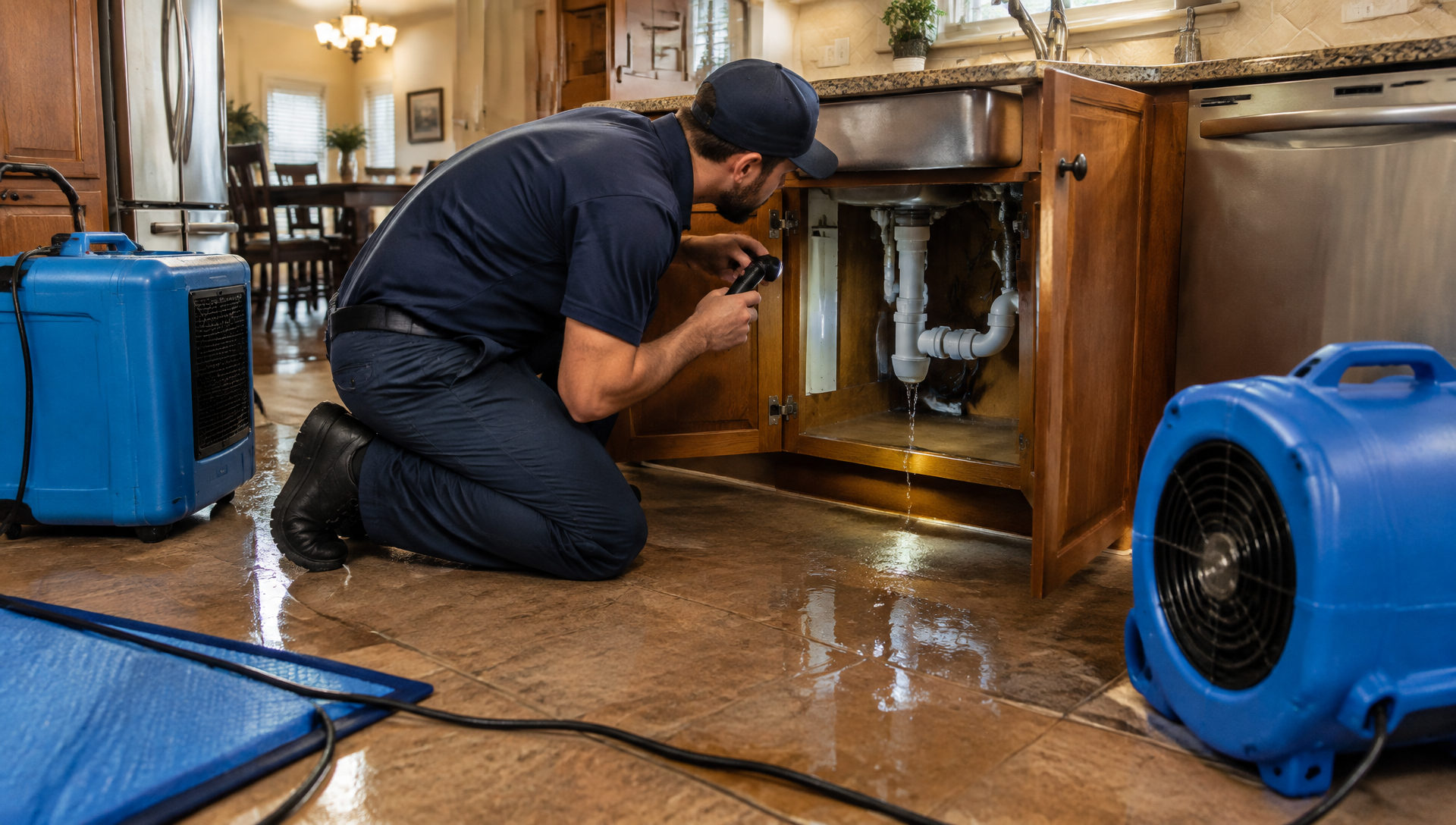
Few things make your stomach drop like the sound of water where it shouldn't be. A pipe can split behind a wall, under a sink, or in the attic, and within minutes you have wet flooring, soaked baseboards, and water creeping into places you can't see. If you're dealing with burst pipe water damage in Abilene, the steps you take in the first hour matter. This guide walks you through what to do, what to avoid, and when it makes sense to call for professional water damage restoration in Abilene.
Why Pipes Burst in Abilene Homes
Most people think of frozen pipes as a northern problem, but West Texas gets its share of hard cold snaps. When temperatures drop fast, water inside pipes in exterior walls, attics, crawl spaces, and garages can freeze and expand. The pipe often splits while it's frozen, and you don't notice anything until it thaws and water starts flowing.
Cold weather isn't the only cause, though. Pipes and fittings can also fail because of:
- Older plumbing that has corroded or worn thin over time
- High water pressure putting steady stress on joints and connections
- Loose or failing fittings on supply lines to sinks, toilets, and appliances
- Shifting foundations or soil movement that strains pipes
What to Do First After a Burst Pipe
Stay calm and work through these steps in order. Your safety comes first.
1. Shut Off the Water
Find your main water shutoff valve and turn it off. In many Abilene homes it's near the street in a meter box, in the garage, or where the main line enters the house. If you only have a small leak under a sink or toilet, the local shutoff valve may be enough. It's worth knowing where your main valve is before you ever need it.
2. Watch for Electrical Hazards
If water is near outlets, appliances, or your electrical panel, stay out of the area. Only shut off power at the breaker if you can reach it without standing in water. When in doubt, keep everyone out of the room and wait for help.
3. Check the Ceiling
A pipe that bursts in the attic or between floors can soak drywall from above. A ceiling that sags, bulges, or drips can come down. Keep people and pets out from under it.
4. Move What You Can
If it's safe, move rugs, electronics, furniture, photos, and important papers out of the wet area. Placing aluminum foil or small blocks under furniture legs can help keep wood from wicking up more water.
5. Take Photos and Call for Help
Snap a few wide shots and close-ups of the damage and the broken pipe, then make the calls. You'll likely need a plumber to repair the pipe and a restoration team to handle the water. Our guide on what to document after sudden water damage covers this in more detail. Just don't let picture-taking hold up the cleanup.
Mistakes to Avoid With Burst Pipe Water Damage
It's natural to want to jump in and fix things yourself. A few common moves can make the damage worse:
- Using a household vacuum on standing water, which is unsafe and can ruin the vacuum
- Assuming carpet, drywall, or cabinets are fine because the surface feels dry
- Closing up walls or laying new flooring before materials are fully dried and tested
- Running space heaters or extension cords near wet floors, which creates a safety hazard
- Waiting a few days to see if the problem goes away on its own
Why Hidden Moisture Is the Real Problem
The water you can see is only part of the story. When a pipe bursts, water travels under flooring, behind baseboards, into wall cavities, and through insulation. Those areas can stay wet long after the room looks dry. That trapped moisture can lead to warped floors, swollen trim, musty odors, and conditions where mold can grow.
That's why professional restoration relies on moisture meters, controlled drying equipment, and follow-up readings instead of guesswork. You can learn more about why professional restoration matters for water damage and how to help prevent mold after water damage.
How Professional Restoration Handles a Burst Pipe
Water Extraction
Standing water is removed with commercial extraction equipment, which pulls far more water out of carpet and pad than household tools can.
Moisture Mapping
Technicians check walls, floors, and cabinets to find out how far the water actually traveled. This helps define what can be dried in place and what may need to be removed.
Structural Drying and Monitoring
Air movers and dehumidifiers are set up to dry the structure, and readings are taken over the following days to confirm progress. Drying isn't considered complete until materials reach acceptable moisture levels.
Mold Concerns and Cleanup
If moisture sat too long or you notice a musty odor, a mold assessment may be the next step. Our mold remediation services in Abilene cover inspection, containment, removal, and verification. Our article on the signs of hidden mold damage explains what to watch for in the weeks after a leak.
When the Water Isn't Clean
A broken supply line usually carries clean water, but a cracked drain or sewer line is a different situation. If the water smells foul or came from a toilet, floor drain, or sewer line, treat it as contaminated and avoid contact. Learn more about sewage cleanup in Abilene and read what to do after a sewage backup before trying any cleanup yourself.
Burst Pipe Water Damage FAQs
Does homeowners insurance cover burst pipe water damage?
It depends on your policy and the cause of the loss. Some policies treat a sudden pipe break differently than a slow leak or long-term wear. Coverage varies, so check your policy or talk with your agent. Good documentation of the damage and the drying process can help support the conversation.
Can I dry out a burst pipe leak with fans?
Fans may help with a very small spill on a hard surface. Once water reaches carpet, drywall, cabinets, or subflooring, household fans usually can't reach the hidden moisture, and a professional assessment is a safer bet.
How can I help prevent pipes from bursting this winter?
Insulate exposed pipes in attics, garages, and exterior walls. Disconnect garden hoses, let faucets drip during hard freezes, and open cabinet doors under sinks on outside walls so warm air can reach the plumbing. If you'll be away, keep the heat on.
Get Help With Burst Pipe Water Damage in Abilene
ServiceMaster by A-Town/Hi-Tech helps homeowners in Abilene and nearby communities, including Tye, Merkel, Clyde, Potosi, and Buffalo Gap, recover from water damage. Our team also handles mold, sewage, and biohazard cleanup when a situation calls for it.
Dealing with a burst pipe right now? Call ServiceMaster by A-Town/Hi-Tech at 325-692-0500 to talk with our team about extraction, drying, and next steps. For more homeowner guidance, visit our Abilene restoration blog.
Need help right now?
Our Abilene crews are on call 24/7 for water damage, mold, sewage, and biohazard emergencies.