
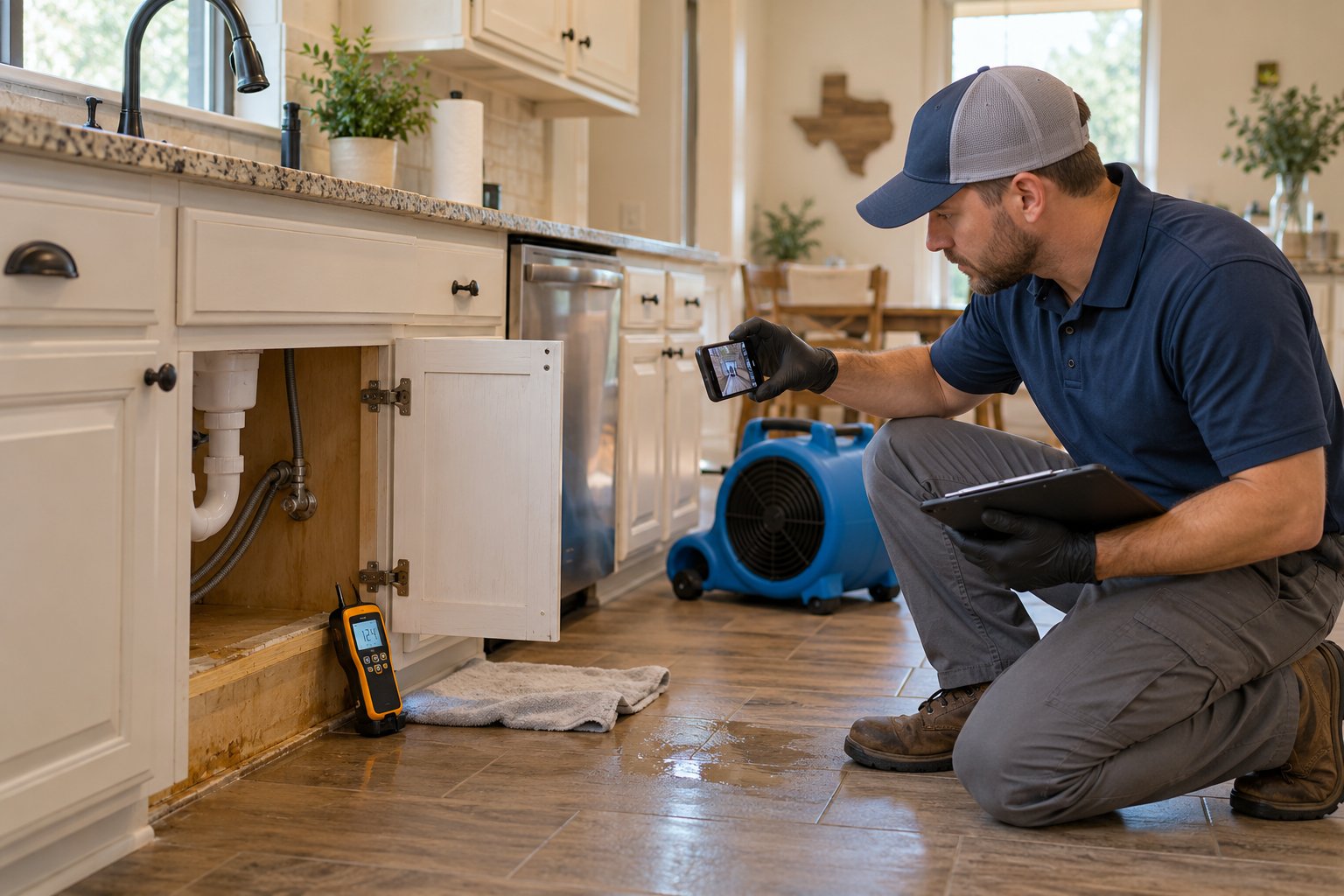
A burst pipe or appliance leak can turn an ordinary day into an urgent cleanup. Once everyone is safe and the water source is controlled, clear documentation can help explain what happened and what was affected. At the same time, do not postpone professional water damage restoration in Abilene just to collect more photos. Water can continue moving into walls, flooring, and subfloors while you wait.
The goal is simple: record the loss safely, protect the property from additional damage, and keep organized information for the restoration team and insurance carrier. Coverage depends on the cause of loss and the terms of the policy, so documentation supports the conversation but does not guarantee payment.
Start With Safety and Stop the Source
Avoid standing water near outlets, appliances, or the electrical panel. If it is safe, shut off the affected water supply or the main valve. For roof damage, contaminated water, or electrical concerns, keep people away from the area and call qualified help instead of entering the space.
Call the restoration company early. Extraction and moisture control can begin while the details are recorded. Quick action may reduce how far water spreads and how much material needs to be removed.
Photograph the Loss Without Disturbing It
Take wide photos that show the entire room, then closer images of the source and visible damage. Capture wet flooring, swollen baseboards, ceiling stains, affected cabinets, and nearby belongings. If water is still moving, a short video may help show the active leak or flow pattern.
Do not remove damaged materials solely for a photo. If emergency work must begin, the restoration team can document conditions, moisture readings, extraction, equipment placement, and materials that cannot be saved.
Create a Simple Timeline and Contents List
Write down when the damage was discovered, when the water was shut off, who was contacted, and when mitigation began. Keep receipts for reasonable emergency expenses and note which rooms or belongings were affected. For valuable items, include a short description and any existing proof of purchase when available.
Preserve emails, claim numbers, estimates, and work authorizations in one folder. A single organized record is easier to share than scattered screenshots and text messages.
Let Moisture Readings Define the Actual Damage
Visible water is only part of the loss. Moisture may remain below flooring, behind cabinets, inside drywall, or in insulation. Professional moisture mapping and follow-up readings help define the affected area and show whether structural drying is working.
If damp materials remain too long, odors and mold concerns may follow. ServiceMaster by A-Town/Hi-Tech also provides mold inspection and remediation when a water event creates conditions that require further assessment. See also our guide on preventing mold after water damage.
Different Water Sources Require Different Handling
A clean supply-line leak is not managed the same way as a sewage backup. Contaminated water can require protective equipment, controlled removal, disposal of porous materials, and disinfection. Avoid direct contact and keep children and pets away.
For contaminated losses, review our sewage cleanup services in Abilene and request professional guidance before attempting cleanup. Our article on what to do after a sewage backup covers the first steps.
Get Water Damage Help in Abilene
ServiceMaster by A-Town/Hi-Tech serves Abilene and surrounding Big Country communities, including Tye and Merkel. For active water damage, call 325-692-0500 for 24/7 assistance. The team can document the damage, begin extraction and drying, and help you navigate the insurance process.
Need help right now?
Our Abilene crews are on call 24/7 for water damage, mold, sewage, and biohazard emergencies.