
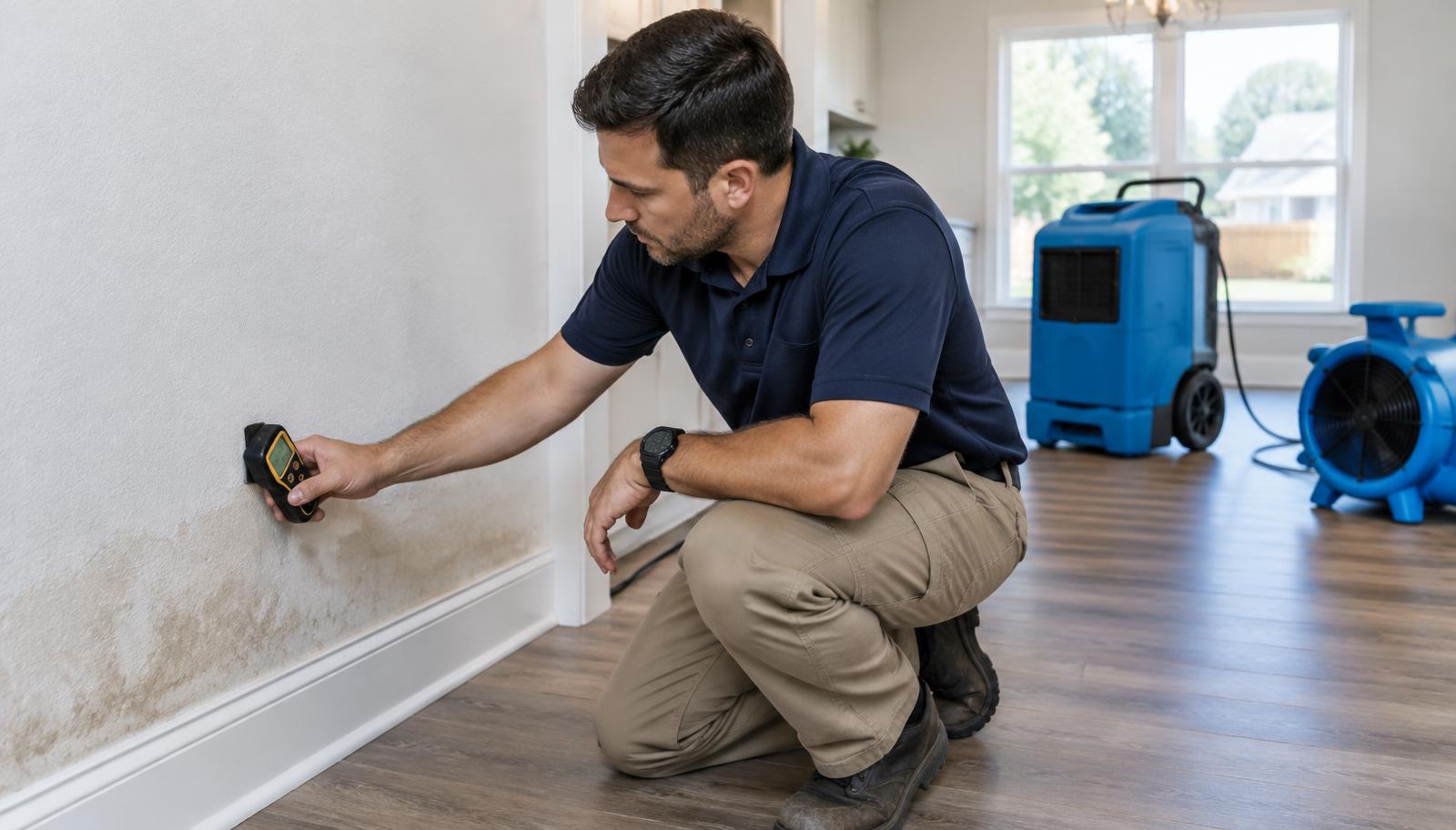
A plumbing leak, appliance overflow, or storm-related intrusion can leave moisture in places that look dry from the outside. Damp drywall, flooring, insulation, and cabinetry may create conditions where mold can develop. Acting quickly is important, but the goal is more than removing visible water: affected materials also need to be dried and checked before repairs are closed up.
ServiceMaster by A-Town/Hi-Tech provides water-damage and mold-remediation services in Abilene and surrounding Big Country communities. If you discover a leak, these practical steps can reduce further damage while you arrange professional help.
Stop the Water and Protect the Area
If it is safe to do so, stop the source by shutting off the appropriate water supply. Avoid rooms with sagging ceilings, electrical hazards, or contaminated water. Move unaffected belongings away from the wet area, but do not pull apart mold-damaged materials or direct household fans across suspected growth.
Dry What You Can See—and Check What You Cannot
Towels and surface cleanup may help with a small spill, but they cannot show whether moisture reached wall cavities or under flooring. Professional moisture meters can help map the affected area. Air movers and dehumidifiers may then be positioned to support controlled structural drying, with readings used to track progress.
For extraction, drying, and moisture monitoring after a leak, review the company's water damage restoration services before replacing drywall, baseboards, or flooring.
Correct the Cause Before Rebuilding
Drying the room without fixing the source can allow the same problem to return. A damaged supply line, roof opening, appliance connection, drainage issue, or persistent condensation may require repair before reconstruction begins. Keep photos, invoices, and drying documentation; they may be useful if you file an insurance claim, depending on your policy and the cause of loss.
Watch for Changes After Drying
After cleanup, pay attention to recurring odors, staining, peeling paint, swelling trim, or a surface that feels damp again. These signs do not prove mold is present, but they can signal that moisture remains or has returned. Prompt reassessment may limit the area affected.
If you notice suspected growth or a persistent musty odor, learn about mold remediation in Abilene. Avoid scrubbing or removing porous materials until the area has been evaluated, because disturbance can spread particles beyond the original location. You can also review the warning signs of hidden mold damage to know what to watch for.
Build Moisture Checks Into Routine Maintenance
Check beneath sinks, around water heaters, behind appliances, and near windows or roof penetrations. Address slow leaks and drainage problems early. Use bathroom and kitchen exhaust fans as intended, maintain HVAC equipment, and keep indoor humidity at a reasonable level for the season. These habits cannot prevent every loss, but they can make hidden moisture easier to catch.
When to Call for Professional Help
Call when water has spread across multiple rooms, reached porous materials, remained for an unknown period, or may involve sewage or another contamination source. Professional evaluation is also appropriate when odors or visible growth return after cleaning.
ServiceMaster by A-Town/Hi-Tech has served Abilene since 1983. Call 325-692-0500 to discuss water or mold damage, or visit the restoration resource center for more property-cleanup guidance.
Need help right now?
Our Abilene crews are on call 24/7 for water damage, mold, sewage, and biohazard emergencies.