
A sewage backup is one of the most serious water emergencies a homeowner can face. Unlike a clean-water leak, sewage—often called Category 3 or "black water"—contains bacteria, viruses, and other contaminants that make it dangerous to handle without proper protective equipment and training. Knowing what to do in the first hours after a backup can protect your family's health and limit the damage to your Abilene home.
First Steps After a Sewage Backup
Your safety comes before anything else. Take these steps as soon as you discover the backup:
- Keep children, pets, and anyone with a compromised immune system out of the affected area.
- Stop using toilets, sinks, and drains until the blockage or cause is identified.
- Turn off electricity to the affected area if water is near outlets or appliances—and only if you can do so safely.
- Open windows for ventilation if weather permits, but do not run your HVAC system, which can spread airborne contaminants.
- Call a professional sewage cleanup company in Abilene before attempting any cleanup yourself.
Why DIY Sewage Cleanup Is Risky
Mopping up sewage with household tools does not remove the contamination—it spreads it. Porous materials like carpet, drywall, insulation, and upholstered furniture absorb contaminated water and often cannot be safely cleaned. Without proper disinfection and disposal, bacteria can remain in your home long after the visible mess is gone.
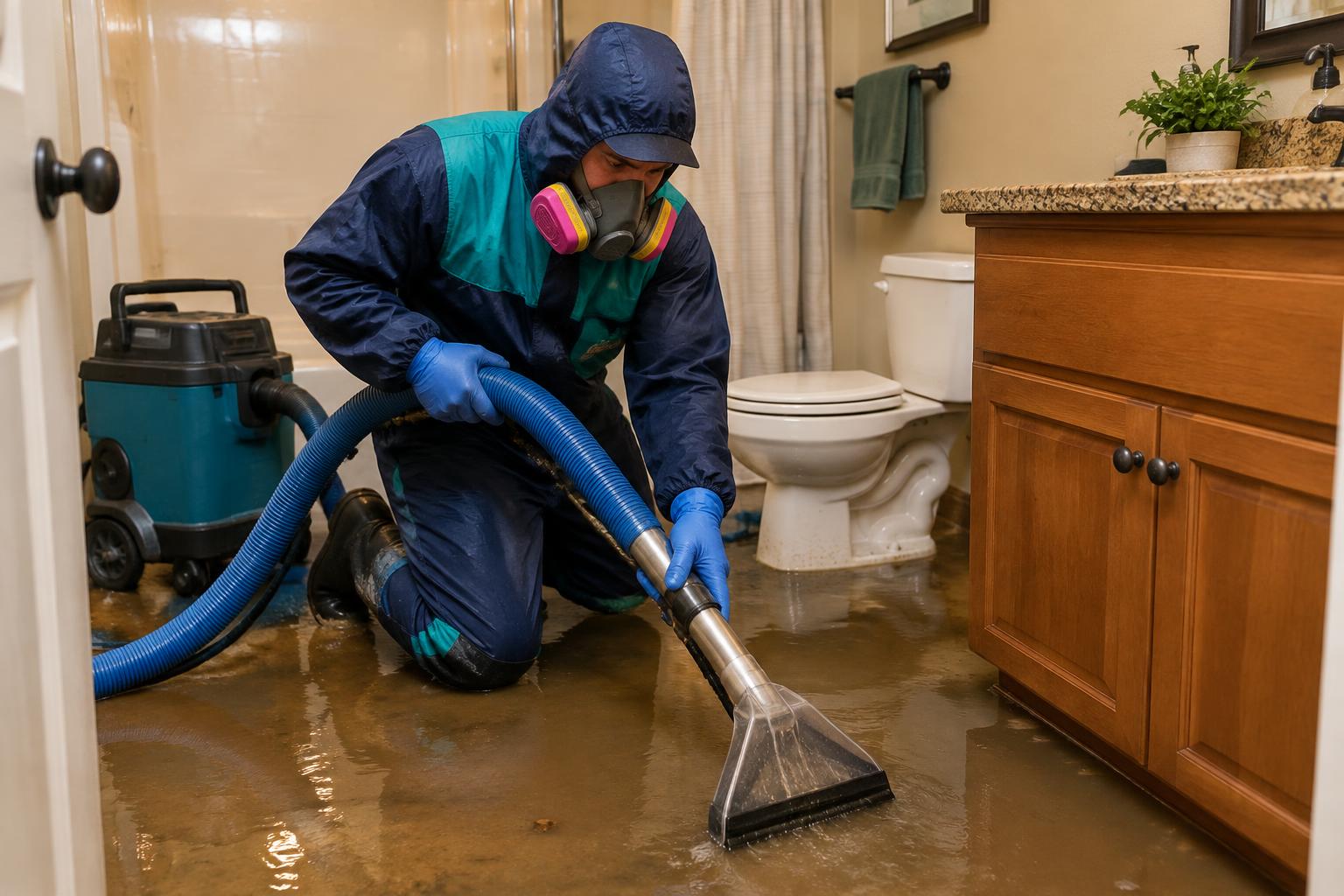
Professional crews wear protective suits, respirators, and gloves, and they use EPA-registered disinfectants and commercial extraction equipment. They also know which materials must be removed and which can be restored—judgment calls that are difficult to make without training.
What Professional Sewage Cleanup Includes
Containment and Extraction
The affected area is isolated to prevent cross-contamination, and standing sewage is removed with commercial extraction equipment.
Removal of Contaminated Materials
Porous materials that cannot be safely decontaminated—such as carpet pad, drywall, and insulation—are removed and disposed of properly.
Cleaning, Disinfection, and Drying
Remaining surfaces are cleaned and treated with antimicrobial products, then dried with air movers and dehumidifiers. Moisture readings confirm the structure is dry before repairs begin. If the backup also left moisture in walls or floors, thorough water damage restoration prevents secondary problems like mold.
Common Causes of Sewage Backups in Abilene
- Tree roots intruding into older sewer lines
- Grease, wipes, and debris clogging the main line
- Heavy rainfall overwhelming municipal systems
- Collapsed or deteriorated sewer pipes
If your home has an older sewer line, a periodic camera inspection can catch root intrusion and deterioration before they cause a backup.
Will Insurance Cover Sewage Backup Cleanup?
Standard homeowner policies often exclude sewer backups unless you carry a water-backup endorsement. Check your policy or ask your agent—this coverage is usually inexpensive and well worth it. A professional restoration company can document the damage and the cleanup process to support your claim.
Get Help With Sewage Cleanup in Abilene, TX
ServiceMaster by A-Town/Hi-Tech has served Abilene and the Big Country since 1983, providing 24/7 emergency response for sewage backups, water damage, and biohazard cleanup. If you're dealing with a sewage backup, call 325-692-0500 right away—the sooner cleanup begins, the less damage your home will sustain. For more guidance, visit our restoration blog, including our article on preventing mold after water damage.
Need help right now?
Our Abilene crews are on call 24/7 for water damage, mold, sewage, and biohazard emergencies.