
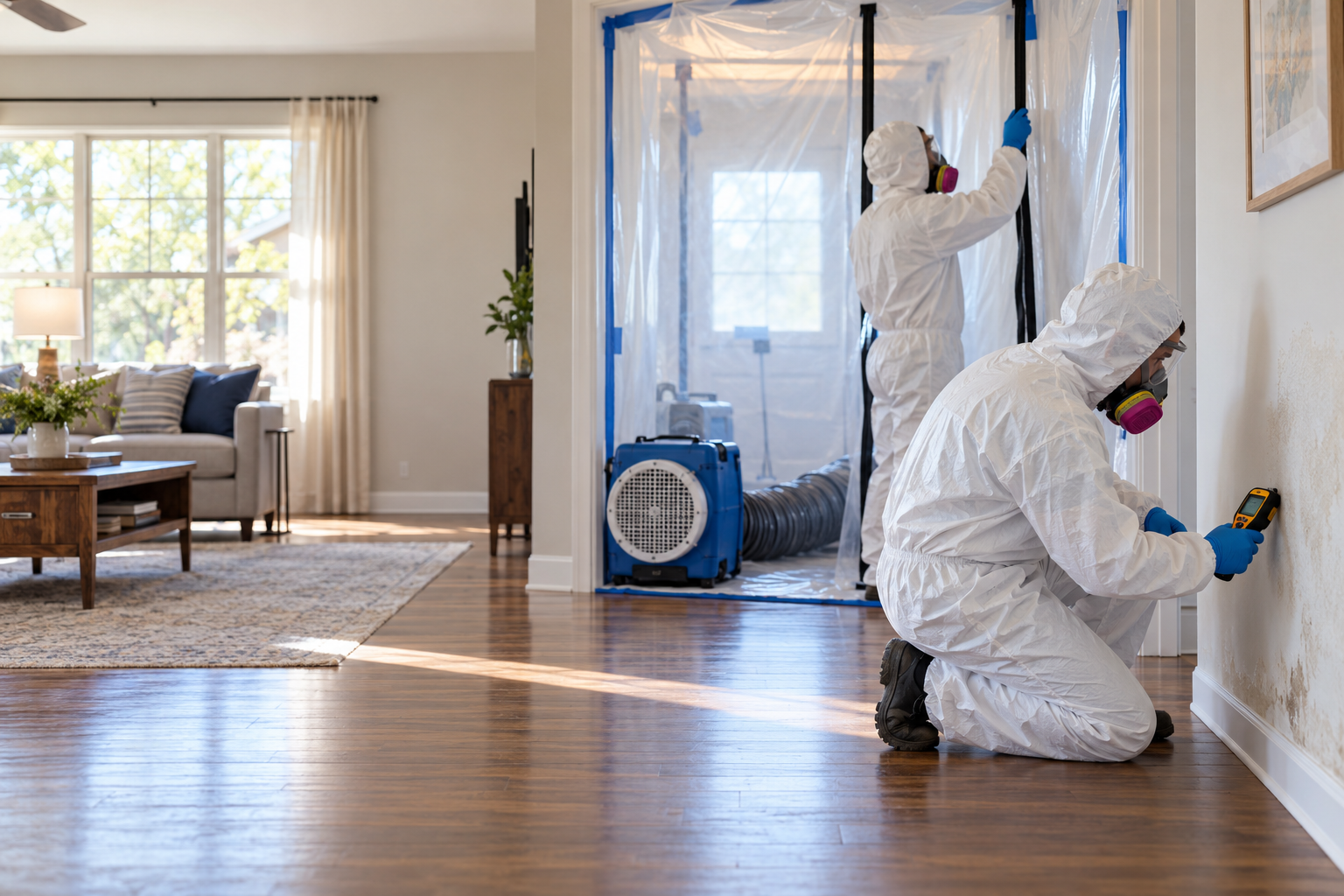
Finding mold can make any room feel unsafe and unpredictable. Professional mold remediation in Abilene, TX, is not simply a matter of wiping away visible growth. A controlled process is needed to address affected materials while limiting the movement of dust and particles into clean areas of the property. Containment is one of the most important parts of that process.
What Mold Containment Is Designed to Do
Containment separates the work area from the rest of the home or business. Depending on the size and location of the affected area, technicians may use polyethylene barriers, sealed openings, controlled entry points, and negative air pressure. HEPA-filtered equipment can help capture airborne particles within the work zone rather than allowing them to travel through hallways or adjoining rooms.
Why Disturbing Mold Can Spread the Problem
Visible growth may be only part of the issue. Cutting drywall, removing insulation, pulling flooring, or moving contaminated belongings can release settled material into the air. Without proper controls, that activity may carry particles beyond the original area. This is why do-it-yourself removal can create additional cleanup needs, especially when the affected material is extensive or the moisture source is hidden.
The Moisture Source Must Be Addressed
Containment supports safe removal, but it does not solve the condition that allowed mold to develop. A complete assessment should look for plumbing leaks, roof intrusion, appliance failures, condensation, or elevated indoor humidity. Moisture meters and other inspection tools help technicians identify damp materials that may not look wet. Correcting the source and drying the area are essential steps because mold may return when moisture remains.
After leaks or water intrusion, our water damage restoration services address extraction, structural drying, and moisture monitoring. For related guidance, read about helping prevent mold after water damage.
What Happens Inside the Work Area
Once the area is isolated, technicians can remove materials that cannot be restored and clean suitable structural surfaces. The exact method depends on the material, level of impact, and project conditions. HEPA vacuuming, controlled cleaning, and EPA-registered antimicrobial products may be used when appropriate. Technicians should also protect nearby contents and keep waste contained as it leaves the work area.
Verification Adds Confidence Before Reoccupation
A professional project should end with more than a visual cleanup. The work area can be inspected, moisture conditions rechecked, and documentation prepared. When the project calls for it, air-quality sampling or post-remediation verification may be used to assess conditions after removal. Requirements vary by property and situation, so the scope should be based on the inspection rather than a one-size-fits-all promise.
Local Mold Remediation Help in Abilene
ServiceMaster by A-Town/Hi-Tech provides mold inspection and remediation for homes and businesses in Abilene and surrounding communities, including Merkel and Clyde. Its supported services include moisture-based assessment, air-quality testing, containment and removal, moisture-source correction, antimicrobial treatment, and post-remediation verification. The locally owned company has served the area since 1983 and is available 24/7 to answer calls.
Noticing a musty odor, visible growth, or signs of past moisture? Call ServiceMaster by A-Town/Hi-Tech at 325-692-0500 to request a mold inspection in Abilene or the surrounding Big Country area. Avoid disturbing suspected growth until the affected area and moisture source can be properly assessed.
Explore our Abilene restoration resources or learn the signs of hidden mold damage for more property-restoration guidance.
Need help right now?
Our Abilene crews are on call 24/7 for water damage, mold, sewage, and biohazard emergencies.